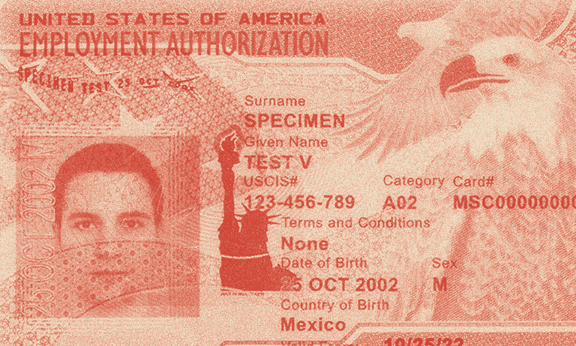
For every traveler entering the United States, the period of authorized stay is their legal right of their visit. It is a common misconception that the expiration date on a visa determines how long one can stay. In reality, the visa is merely an entry document; the actual duration of your stay is governed by the I-94 arrival/departure record, which is issued digitally upon entry. Staying even a single day past the date specified on your I-94 constitutes a “visa overstay,” an action that carries heavy weight in the eyes of U.S. immigration authorities.
Henceforth, maintaining a valid status is essential for anyone who wishes to travel to the U.S. in the future By understanding how overstays are calculated and the penalties associated, travelers can make informed decisions to protect their immigration future.
What is a Visa Overstay?
A visa overstay occurs when a foreign national remains in the U.S. beyond the “admit until” date established by an immigration officer at the port of entry. While your visa might be valid for ten years, your permitted stay for a single visit is usually limited to six months or less. Once that authorized period ends, you begin to accrue “unlawful presence.” With this period of unauthorized stay, U.S. Citizenship and Immigration Services (USCIS) determines the severity of your violation and the resulting penalties.
A valid visa and a valid stay are different things. Your visa allows you to travel to a U.S. port of entry and request permission to enter. Once you are in the country, the I-94 record specifies your legal status. If you remain past that date without filing for an extension or a change of status, your visa is often voided automatically. This means you can no longer use that visa for future travel, even if the date on the visa has not yet passed.
Consequences of Overstaying Your U.S. Visa
Once an overstay violation is recorded, the individual is no longer considered to be in “good standing,” which triggers a series of automatic and discretionary penalties. These consequences are designed to deter non-compliance and maintain the integrity of the border.
The most common results of an overstay include:
- Automatic Visa Voidance: Under the law, your current visa becomes physically and legally void the moment an overstay occurs. You must return to your home country to apply for any new visa.
- Loss of Visa Waiver Eligibility: If you are from a country that participates in the Visa Waiver Program (ESTA), a single overstay will result in a permanent loss of this privilege. You will be required to apply for a formal B-1/B-2 visa for all future visits.

- Ineligibility for Change of Status: Once you are out of status, you cannot apply to change to another non-immigrant category (such as from a tourist to a student) while remaining in the U.S.
- Deportation and Removal: Individuals without a valid status are subject to arrest and removal proceedings, which can lead to a formal deportation order and even longer bars to re-entry.
- Increased Scrutiny: Any future visa application will be flagged for past violations, making it much harder to prove “non-immigrant intent” to a consular officer.
The weight of these outcomes varies based on the length of the overstay, but even a short violation can close the doors to the U.S. for years if not managed with a professional strategy.
Read also: The 90-Day Rule: What You Need to Know
3-Year and 10-Year Bars: How They Work
One of the penalties in U.S. immigration law involves the “bars to admissibility” based on unlawful presence. These bars become active the moment a person who has overstayed leaves the U.S. and attempts to return. The length of the bar is calculated with the total number of days spent in the country without authorization.
If you stay in the U.S. illegally for more than six months but less than a year, you will be subject to a 3-year bar, meaning you are banned from returning to the country for three years once you leave. If the period of unlawful presence reaches one year or more, the penalty increases to a 10-year bar.
These bars are rigid and often prevent families from reuniting or professionals from returning to their careers. It is important to note that these penalties only take effect upon departure. If an individual remains in the U.S., they are not yet subject to the bar, but they are in a precarious legal position where they could be detained or placed in removal proceedings at any time.
Impact on Future Visa and Green Card Applications
Overstaying a visa creates a dramatic barrier for those who eventually hope to obtain a Green Card. Under the immigration law, most applicants for “Adjustment of Status” (applying for a Green Card from within the U.S.) must have maintained a continuous lawful status. An overstay can make an applicant ineligible to adjust status, forcing them to leave the country and face the 3-year or 10-year bars mentioned above.
However, there are limited exceptions. The most common involves “Immediate Relatives” of U.S. citizens—spouses, unmarried children under 21, and parents. For this specific group, an overstay can be forgiven if the individual entered the U.S. legally (with inspection) and is otherwise admissible. For most employment-based categories, however, an overstay is usually a disqualifying factor for adjusting status.
Beyond the legal ineligibility, there is the issue of “discretion.” Consular officers have wide latitude to deny visas if they believe an applicant is likely to overstay again. A past violation serves as strong evidence of a lack of respect for U.S. laws, requiring a much higher burden of proof to overcome in future interviews.
Options If You Have Already Overstayed
If you find yourself in a situation where you have already stayed past your I-94 date, the most important step is to avoid panic and seek professional guidance immediately, as there are legal pathways that may mitigate the damage.
Depending on your circumstances, your options might include:
- Adjustment of Status (Marriage to a U.S. Citizen): As noted, if you are an immediate relative of a citizen, you may still be able to obtain a Green Card without leaving the country.
- Asylum or Withholding of Removal: If you cannot return to your home country due to a well-founded fear of persecution, you may be eligible for protection regardless of your overstay.
- U or T Visas: Victims of certain crimes or human trafficking who cooperate with law enforcement may be eligible for a visa that leads to a Green Card, even with prior status violations.
- Voluntary Departure: In some cases, working with an attorney to arrange a voluntary departure can help you avoid a formal deportation order, which carries its own separate bars.
Remember, every day spent in the U.S. without a strategy increases the risk of triggering the 3-year or 10-year bars. Taking proactive steps as soon as the error is discovered is the only way to protect your long-term interests.
Waivers for Unlawful Presence
For individuals who are already barred from reentering to the U.S., or are about to, a “waiver” (forgiveness) is often the only way to return to the U.S. The most common forms are the I-601 and the I-601A. These waivers are not granted easily; they require the applicant to prove that their absence would cause “extreme hardship” to a qualifying U.S. citizen or Green Card holder relative (spouse or parent).
In particular, the I-601A waiver is quite useful because it allows eligible individuals to apply for the waiver while still inside the United States. This reduces the time families spend separated before the traveler leaves the U.S. Furthermore, proving “extreme hardship” involves demonstrating more than the usual sadness of separation; it requires evidence of medical, financial, or educational crises that the U.S. relative would face without the applicant.
When a waiver is approved, the 3-year or 10-year bar is effectively erased for that application, allowing the individual to receive a visa and return to the U.S. legally.
Visa Overstay: Frequently Asked Questions
- What happens if I overstay my U.S. visa? Your visa is automatically voided, you become subject to deportation, and you may be barred from returning for 3 or 10 years depending on the length of your stay.
- How long can I overstay without consequences? There is no “safe” period. Even a one-day overstay voids your visa. However, the 3-year bar only starts after 180 days of unlawful presence.
- Does overstaying affect my Green Card application? Yes. For most people, it makes them ineligible to get a Green Card without leaving the U.S. and facing a re-entry bar. Exceptions exist mainly for immediate relatives of U.S. citizens.
- Can I get a waiver for unlawful presence? Yes, if you can prove that your exclusion would cause extreme hardship to a U.S. citizen or Green Card holder spouse or parent.
- What is the 3-year and 10-year bar? These are penalties triggered when you leave the U.S. after an overstay. 180+ days of overstay triggers a 3-year bar; 365+ days triggers a 10-year bar.
- Can I stay in the U.S. if I marry a citizen after overstaying? If you entered legally, you can apply for a Green Card through marriage to a U.S. citizen even if you overstayed, as this category has a special exemption.
- If I overstay, can I still travel to other countries? You can travel to other countries, but the U.S. overstay record will be visible to other consulates and may affect your ability to get visas for the UK, Canada, or the Schengen Area.
- Is I-94 the same as the visa expiry date? No. The visa expiry date is the last day you can enter the U.S.; the I-94 date is the last day you are allowed to stay inside the U.S.
Overstaying a visa is a critical violation that requires a swift and professional response. While the legal challenges are many, they can be surpassed by those who take the right steps at the right time. A well-constructed legal strategy can be the difference between a lifetime ban and a fresh start in the U.S.
The Grape Law team specializes in resolving complex status issues and managing waiver applications with precision. If you are facing an overstay situation or are worried about your upcoming expiration, do not wait until it is too late. Our experts are ready to help you plan a clear path forward. For a detailed evaluation of your case, please contact us at info@grapelaw.com.
Categories