Holding two passports is a goal for many people moving to the United States as it provides numerous benefits for both international travel and flexible work. However, U.S. dual citizenship brings up questions about loyalty, legal obligations, and tax duties, too.
The U.S. policy toward dual nationality is one of allowance without official promotion. While the government recognizes that multiple citizenships exist, it does not have a formal process to grant dual status. Instead, dual citizenship is automatically gained when the laws of two countries overlap. For instance, an immigrant who naturalizes in the U.S. might keep their original citizenship if their home country permits it.
Understanding these rules is essential for anyone considering naturalization. This guide explores the legal stance of the U.S. on dual citizenship, the benefits and risks involved, and how holding two nationalities can affect your daily life.
Does the U.S. Allow Dual Citizenship?
The U.S. government does not require a person to choose one citizenship over another. While the naturalization oath mentions renouncing “allegiance and fidelity” to any foreign prince or state, U.S. law does not ask you to give up your original passport. As long as your home country does not strip you of your citizenship once you become an American, you can legally hold both citizenship at the same time.
On the other hand, U.S. expects you to use your American passport when entering and leaving the country. While you are on American soil, the government views you as a U.S. citizen. This means that you have all the rights of a citizen, but cannot ask for “diplomatic protection” from your other country should you run into legal trouble in the U.S.
Note that you do not lose your U.S. citizenship just by naturalizing in a foreign country. If you wish to renounce your U.S. citizenship, you need to formally give it up at a U.S. embassy or consulate abroad.
Countries That Allow Dual Citizenship with the U.S.
Whether you can maintain dual status depends on the laws of your other country. Some nations accept dual nationality, while others instantly revoke citizenship the moment you take an oath elsewhere.
Many countries allow dual citizenship for U.S. immigrants, including but not limited to:
- The Americas: Canada, Mexico, Brazil, Argentina, and Colombia.
- Europe: The United Kingdom, Ireland, Italy, France, and Germany.
- Oceania: Australia and New Zealand.
Certain countries have conditional rules. For example, Spain allows dual citizenship for Latin Americans and Filipinos, but may ask others to renounce their foreign citizenships. Countries like India do not allow dual citizenship but offer a “Permanent Residency” status for former citizens. Always check the latest laws of your home country before starting the U.S. naturalization process.
Researching these rules now helps you avoid losing your original nationality by mistake. Finding out if a “retention” application is needed can protect your status before you take the U.S. oath.
Benefits of Holding Dual Citizenship
Holding dual citizenship provides a variety of practical and personal advantages as it effectively doubles your opportunities for where you can live, work, and own property.
- Ease of Travel: You can use whichever passport offers easier entry or visa-free travel to a destination.
- Work Authorization: You have the legal right to work in both countries without needing a visa or work permit.
- Property Ownership: Some countries restrict land ownership to citizens. Dual status allows you to buy property in both nations without these barriers.
- Social Benefits: You may be eligible for social security, healthcare, and educational benefits in both countries.
Beyond these perks, dual citizenship allows you to stay connected to your heritage. You can vote in both countries and participate in their politics.
Read also: What are the Benefits of the U.S. Citizenship?
Risks and Complications of Dual Citizenship
While its benefits are many, dual citizenship also comes with risks. For instance, when you hold two nationalities, you are subject to the laws of two different governments, which can sometimes lead to conflicting obligations. Some of the risks can entail the following:
- Competing Civic Duties: You may have to serve in the military in one country, which could potentially jeopardize your status in the other.
- Job Restrictions: Certain high-level government or military roles in the USA ask for a security clearance that is difficult for dual citizens to obtain.
- Travel Risks: If you travel to your other country of citizenship, the U.S. government has limited power to help you if you encounter legal issues there, as that country views you as its own citizen.
Being a dual citizen means you must be careful about your actions. For example, using a foreign passport to enter a third country while claiming to be a U.S. citizen can sometimes cause confusion or delays at the border. Understanding these limitations is a necessary part of managing your dual status.

Dual Citizenship and U.S. Tax Obligations
One of the most misunderstood parts of being an American citizen is the tax system. The U.S. uses “citizenship-based taxation.” This means that as a U.S. citizen, no matter where you live or which passport you use, you must report your worldwide income to the IRS every year. To stay in good standing with the law, you should be aware of how this policy translates into your annual filing and reporting duties:
- Global Filing: If you live abroad, you still have to file a U.S. tax return if your income is above a set limit.
- Reporting Foreign Assets: You must disclose foreign bank accounts (FBAR) and assets (FATCA) if they exceed specific reporting thresholds.
- Avoiding Double Tax: The U.S. has tax treaties and credits (like the Foreign Tax Credit) to prevent you from paying full taxes to two countries on the same income.
Holding dual citizenship does not exempt you from these rules. In fact, it often makes your tax situation more complex. Many dual citizens living abroad only discover these rules when they try to open a bank account or sell property, so staying ahead of your filing duties is vital.
How Naturalization Affects Your Original Citizenship
Becoming a U.S. citizen is the moment when your original citizenship is most at risk. During the U.S. ceremony, you take an oath of allegiance. While the U.S. does not report your naturalization to your home country, many nations find out through passport records or data-sharing agreements.
If your home country prohibits dual citizenship, you might lose your original nationality the moment you take the U.S. oath. Some countries allow you to “reclaim” your citizenship later, while others consider the loss permanent.
To protect yourself, you should talk with your home country’s consulate before filing Form N-400. Knowing the exact consequences of becoming a U.S. citizen will help you make an informed decision about your future.
Can a Green Card Holder Hold Dual Citizenship?
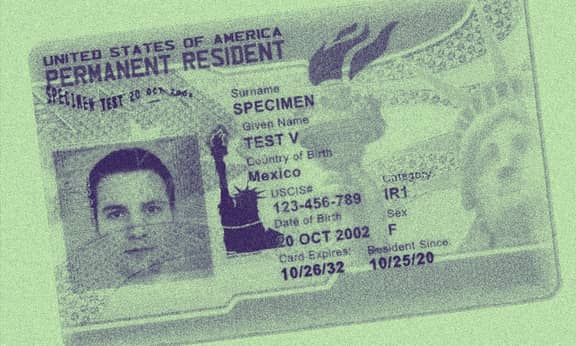
Technically, a Green Card holder is a citizen of their home country and a “permanent resident” of the U.S., not a dual citizen. Dual citizenship is approved once you successfully complete the naturalization process and become a U.S. citizen.
However, a Green Card holder can hold dual citizenship with two other countries. For example, a person with both Italian and Canadian passports can live in the U.S. as a permanent resident. In this case, their Green Card is tied to one of those nationalities, but they still hold both passports.
Becoming a U.S. citizen adds a layer of security that a Green Card cannot provide. While residents must keep a clean record and follow residency rules to keep their status, citizens have a permanent right to stay in the country.
| Feature | Green Card (Permanent Resident) | Naturalization (U.S. Citizen) |
|---|---|---|
| Right to Vote | No | Yes (Federal and local) |
| Passport | Use home country passport | Eligible for a U.S. passport |
| Deportation Risk | Possible for certain crimes/violations | Virtually impossible |
| Renewal | Every 10 years | Never (Status is permanent) |
| Travel | Restricted time outside the U.S. | No limits on travel time |
| Government Jobs | Most are unavailable | Eligible for almost all roles |
| Sponsorship | Can sponsor spouse and children | Can sponsor parents and siblings |
Green Card vs. U.S. Citizenship
U.S. Dual Citizenship: Frequently Asked Questions
Does the U.S. officially recognize dual citizenship?
Dual citizenship is allowed in the U.S. and since no law forbids it, you can legally own and use two passports.
Will I lose my home country citizenship if I become a U.S. citizen?
This depends on the laws of your home country. Some allow it, while others automatically revoke your citizenship.
Do dual citizens have to pay taxes in both countries?
You must file a U.S. tax return on your worldwide income. Whether you pay taxes to both depends on the local laws and tax treaties between the U.S. and your other country.
Can I use both passports when traveling?
Yes, but you must enter and leave the USA using your American passport. You can use your other passport to enter your home country or other nations.
Do dual citizens serve in the military in both countries?
This is a risk. Some countries have mandatory service for citizens. In the U.S., men ages 18-25 must register for the Selective Service, though a draft has not occurred in decades.
Can I vote in both countries?
Yes, if both countries allow it. U.S. citizens can vote in U.S. elections from anywhere in the world.
Can the U.S. government revoke my dual citizenship?
The U.S. cannot revoke your foreign citizenship. It can only revoke your U.S. citizenship in rare cases of fraud during naturalization or if you formally give it up.
In sum, dual citizenship is a valuable status that offers freedom across borders. While it means managing extra responsibilities, like global tax filing, the rewards for your career and family can worth the effort. By understanding the rules, you can enjoy the best of both worlds.
The Grape Law team is here to guide you through the naturalization process and help you understand how U.S. citizenship affects your current status. If you have questions about your eligibility or the impact on your home country’s passport, we are ready to assist. For more information, reach out to us at info@grapelaw.com.

Categories