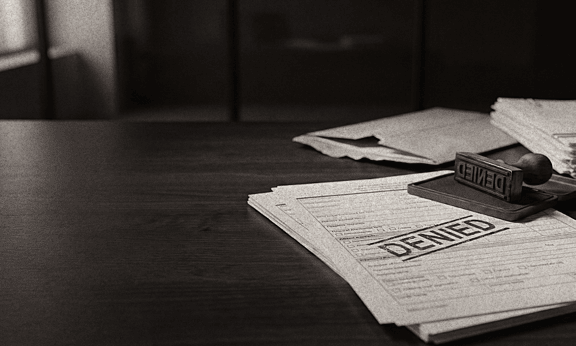
A federal court has stopped the rule that would have put every F-1 student on a fixed four-year clock. On September 14, 2026, one day before the rule was to take effect, the US District Court for the District of Massachusetts postponed its effective date nationwide.
The result is simple to state: duration of status remains in force. International students, exchange visitors and foreign media representatives keep the admission framework they have today, while the lawsuit continues.
What the Court Decided
Judge F. Dennis Saylor IV postponed the rule’s effective date under section 705 of the Administrative Procedure Act, the law that lets courts pause an agency action while its legality is litigated. The case is Presidents’ Alliance on Higher Education and Immigration v. Department of Homeland Security, No. 1:26-cv-13799, filed by higher education associations and unions representing nearly 600 institutions.
The relief is nationwide, not limited to the plaintiffs’ member schools. The court reasoned that two parallel admission regimes, one for some universities and one for the rest, would create confusion for students who transfer or pursue joint degrees.
Two limits matter. The court denied the request to vacate the rule outright, and it denied summary judgment, both without prejudice. The rule still exists; it simply cannot take effect while the postponement stands.
What the Blocked Rule Would Have Done
The DHS final rule, published July 17, 2026, would have ended duration of status for the F, J and I categories. F-1 students would have been admitted for their program length, capped at 4 years, with 30 days after the program end date to depart, down from the 60 days students have today.
J-1 exchange visitors faced the same 4-year ceiling and 30-day departure period, and I media representatives a 240-day admission. Anyone needing more time would have filed an Extension of Stay with USCIS, with work authorization continuing up to 240 days while a timely filing was pending.
Students already in the United States were not exempt: the transition provisions gave current duration-of-status holders up to 4 years from the effective date. The rule also limited second programs at the same or a lower educational level. Our earlier guide to the 4-year limit and its mechanics walks through those provisions in detail.
Why the Court Blocked It
The court found the plaintiffs likely to succeed on their claim that the rule is arbitrary and capricious, the Administrative Procedure Act’s standard for agency action that lacks reasoned justification. The 48-page order identifies four independent failures.
First, DHS never calculated the rule’s costs, even as commenters cited research putting the economic loss from falling enrollment in the tens of billions of dollars per year. Second, the agency did not seriously consider alternatives, such as improving the SEVIS tracking system it already runs, or fixed terms aligned with real program lengths. Third, it did not meaningfully answer roughly 22,000 public comments, most in opposition. Fourth, it failed to connect the rule to its stated fraud and national security goals; the court wrote that the government’s national security contention “borders on the absurd.”
What Does the Ruling Mean for F-1 Students Right Now?
Nothing about your admission changed on September 15. If you were admitted for duration of status, you remain in duration of status: you can stay as long as you maintain full-time study and comply with the terms of your visa category. No 4-year clock started, and no Extension of Stay filing is needed.
Your ordinary obligations are unchanged, and this is worth stating plainly. Keep your SEVIS record accurate, stay enrolled full time, work only with authorization, and keep your I-20 travel signatures current. A court postponement does not revive a status that ended for other reasons, and it does not extend an expired work permit.
The same holds for J-1 exchange visitors and I media representatives. The rule’s fixed periods are on hold as well, the 240-day media admission among them.
What Happens Next
The postponement is temporary relief, not the end of the case. A status conference is set for October 2, 2026, the government can appeal, and the rule could still take effect later if DHS prevails or fall permanently if the plaintiffs do.
Sensible preparation costs little. Know your program end date, keep your documents organized, and check with your Designated School Official before travel or filings. If the rule returns, extensions would run through Form I-539; our change of status and extension guide explains that filing. For students still choosing a path, the student visa categories and their work rights did not change with this ruling.
Unsure how the litigation affects your program, your OPT plans, or your timeline? Contact us for a case-specific assessment; we track the case and will map your options as it develops.
This article is for informational purposes only and does not constitute legal advice. Every immigration case depends on its own facts. For an assessment of your specific situation, consult an immigration attorney.
Categories